Bannon and Musk in the Epstein files: direct messages, proposed visits and their explanations
Bannon discussed politics and publicity with Epstein. Musk discussed possible island visits. Their explanations, original records and the gaps in the evidence.
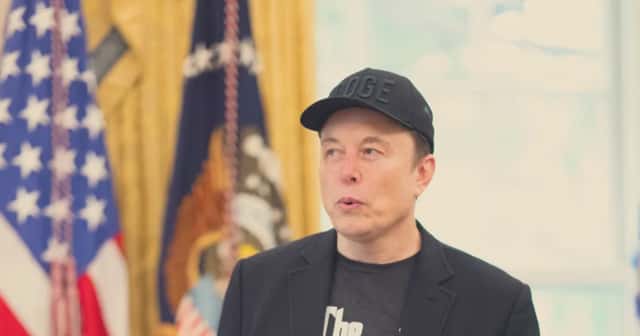
Steve Bannon and Elon Musk both communicated with Jeffrey Epstein after his 2008 conviction, but the records show different kinds of contact. Bannon's messages include political discussion and advice about handling publicity. Musk's emails include attempts to arrange island visits, along with evidence that at least one plan failed.
That difference is essential to understanding the files. A direct message can establish contact. A proposed trip does not establish arrival. A subject's explanation belongs beside the document, but neither a denial nor an accusation should substitute for reading the exchange.
Bannon served as Donald Trump's White House chief strategist in 2017. Musk served as a White House adviser in 2025; the White House described him as departing that role at a May 30 press conference. The communications examined here predate Musk's government service and follow Bannon's departure. They should not be described as messages sent in the course of their Trump administration duties.
Both men have explanations on the record. Bannon has said his dealings with Epstein were related to a documentary project. Musk has said his correspondence was limited, denied accepting island invitations and argued that the messages could be used to smear him. The task is to assess what those explanations answer and what the documents independently establish.
Two different records#
| Person | Material examined | Supported description | Limit |
|---|---|---|---|
| Bannon | June 2018 email on European politics | Direct political communication | Does not establish an official government channel |
| Bannon | February 2019 publicity messages | Advice about whether Epstein should speak publicly | Does not establish participation in abuse |
| Musk | Reported 2012–13 island-planning emails | Interest in possible visits and scheduling | Does not prove a completed visit |
| Musk | January 2, 2013 cancellation exchange | A particular plan did not work | Does not resolve every possible encounter |
| Musk | January 31, 2026 X response | His public denial and explanation | Must be assessed against the underlying record |
Sources: House-released Bannon email, Bannon message record, Musk cancellation exchange, USA Today reporting, Musk's statement.
Bannon's political exchange was direct#
A June 10, 2018 email released by the House shows Bannon forwarding an article about Trump's promise to host Italian Prime Minister Giuseppe Conte. Epstein replied favorably, and Bannon followed up with a reference to Vladimir Putin in Vienna. The page is marked HOUSE_OVERSIGHT_027045.
The document establishes a direct exchange about political events. Its significance does not depend on a count of how often Bannon's name appears elsewhere. Here, the sender, recipient, date and subject can be identified. That is a stronger basis for describing contact than an isolated name in someone else's address book.
The exchange does not show that Bannon was acting for Trump or relaying official instructions. Nor does Epstein's interest in international politics establish that he influenced a government's decisions. Those would be separate claims requiring separate evidence. A private correspondent's apparent access to political discussion is the fact the document supports.
It also matters that Bannon was no longer White House chief strategist at the time. Calling the email a communication with a “Trump official” without the date could leave readers with the wrong impression about its institutional status. Former officeholders can retain influence and contacts, but those are not the same thing as holding a government post.
The 2019 messages address Epstein's publicity problem#
A separate Justice Department record, EFTA01616057 and following pages, contains February 2019 exchanges about renewed scrutiny of Epstein's earlier prosecution. The thread includes discussion of news coverage, whether Epstein should respond and whether an attorney should speak.
Bannon advised against a public response. The record shows him warning that speaking would make the matter a leading global story. This is a concrete example of advice about publicity; it is more specific than merely calling the two men acquaintances. It still does not establish a formal public-relations contract or a payment.
The surrounding messages matter. Epstein was proposing ways to defend the earlier agreement with prosecutors. Bannon's replies should be read in that context, rather than as detached quotations that could refer to any subject. The file shows a conversation about Epstein's public exposure, not proof that Bannon knew every fact about his conduct.
That distinction leaves a serious question intact. What was Bannon trying to achieve through those dealings, and how did the advice relate to his filming project? It is possible to press that question without asserting that every effort to manage publicity is itself criminal conduct.
Bannon says the documentary explains his dealings#
In a statement reported by CNN in February 2026, Bannon said the communications should be viewed through his work on a documentary about Epstein. He said the project would expose its subject and challenge the myths he had created.
This is Bannon's account of purpose, relayed by the news organization that reported it. It should not be silently recast as an established finding about the project. A film-maker may develop rapport with a subject, and friendly messages do not automatically settle a journalist's intention. The released advice nevertheless remains evidence readers can assess.
The most useful way to test the explanation would be to compare the full interviews, the production plan and the surrounding correspondence. Editing can change how an exchange appears. A project described as an exposé should be judged by its questions, evidence and intended presentation, not solely by its creator's later label.
The records also do not require a binary choice between believing that every message was harmless research and believing that Bannon participated in abuse. There are other questions about judgment, purpose and assistance. Those questions are substantial enough to report in their own terms.
Musk's emails show planning, with an important gap#
USA Today's review of released emails described exchanges in 2012 and 2013 about visiting Epstein's Caribbean island. One November 2012 message asked which night would have the most active party. Later correspondence discussed holiday travel and possible dates.
Those messages support saying Musk expressed interest in a visit. They complicate an account in which every overture came from Epstein and was simply rejected. They do not establish that Musk arrived. The distinction between willingness, planning and completion is central to an accurate description.
The reviewed original January 2, 2013 exchange is particularly useful. Musk said the logistics would not work that time. Epstein's reply expressed regret and left open other opportunities. The preceding invitation proposed lunch with Musk's wife.
That is evidence against describing this particular plan as a completed trip. It cannot establish that no meeting ever occurred at any other time. Equally, the fact that another opportunity remained possible cannot be treated as proof that it happened. The proper conclusion is bounded by the exchange.
A calendar entry or proposed helicopter transfer would need similar care. A schedule shows intent or an organizer's expectation. Travel records, a reliable witness or an acknowledgment could add evidence of completion. Without that additional step, a headline saying someone “visited the island” goes beyond the material described here.
Musk's public response is available in his own words#
On January 31, 2026, Musk posted on X that he had limited correspondence with Epstein and had declined repeated invitations. He said detractors could misinterpret the emails and called for prosecution of people who committed serious crimes with Epstein.
The post provides his response directly, rather than through an opponent's summary. It does not resolve the difference between the language of the planning emails and the impression conveyed by a broad denial. Readers can assess both, while retaining the important limit that a completed island visit is not established by these records.
The argument about prosecution raises a separate standard. Criminal cases require evidence about particular conduct and the relevant person's involvement. Public scrutiny of a prominent former adviser can address accuracy and judgment before that standard is met. It should not pretend that scrutiny itself is a conviction.
The size of Musk's audience does not change what the records show. A denial can be widely shared and still require checking. A critical post can attract millions of views and still overstate the evidence. Neither popularity nor political alignment supplies a missing travel record.
The common issue is how powerful people describe past access#
Bannon's defense turns on the purpose of a relationship and a film project. Musk's turns partly on the extent of correspondence and whether proposed visits occurred. Treating the cases as identical would obscure the questions each man is actually being asked to answer.
Our overview and connection tables place them alongside other current and former Trump appointees. The comparison includes confirmed contact, indirect references and official handling of cases. Those categories are designed to keep a broad phrase such as “connected to Epstein” from doing more work than the evidence permits.
Howard Lutnick's acknowledged island lunch provides a useful contrast because the visitor has confirmed it. Steve Feinberg's Cerberus-related records require a different distinction between a company's name and an individual's actions. Steve Witkoff's appearance in a forwarded news article is weaker evidence of personal contact.
None of these comparisons should become a ranking of guilt. They identify what further evidence is needed. A person who has acknowledged a meeting can explain its circumstances. A person named only in a clipping may have had no involvement in creating or forwarding the item at all.
Transparency and precision serve the same inquiry#
Representatives Ro Khanna$ and Thomas Massie$ jointly requested access to unredacted records on January 30, 2026. Their letter sought fuller access for congressional oversight and criticized inconsistent redactions, including failures to protect victims' names. It framed disclosure as a means to accountability, not a substitute for proving a claim.
The Justice Department's release notice described a broad production that included material submitted by the public and warned that some submissions could be false. That is why this account identifies specific exchanges and avoids drawing conclusions from a name count.
Further reporting should look for complete threads, production records and reliable travel evidence. It should also preserve corrections and meaningful responses. Under 567politics' editorial standards, the supported account is that Bannon discussed politics and publicity directly with Epstein, while Musk discussed possible visits that the reviewed record does not prove occurred. The questions about their judgment remain real; the limits on the evidence remain real too.
Differing perspectives
How should Bannon's and Musk's communications with Epstein be interpreted?
Each position is summarized as its supporters make it, with equal weight and in alphabetical order. A summary is not an endorsement; the evidence for each is weighed in the story above.
Bannon says the film project explains his dealings
Who holds it: Steve Bannon
Bannon says his communications should be understood through his documentary work on Epstein. He describes the intended project as an effort to expose its subject and challenge the myths around him. This explanation asks readers to distinguish rapport developed for filming from endorsement of Epstein's conduct.
In their words: Bannon statement to The New York Times, February 16, 2026 ↗
Musk disputes a wider relationship and calls for prosecutions
Who holds it: Elon Musk
Musk says his correspondence was limited and that he declined invitations to Epstein's island or plane. He argues that excerpts may be misinterpreted to smear him and says the focus should be prosecuting serious crimes. His statement does not independently resolve what happened to each proposed visit.
In their words: Elon Musk's January 31, 2026 X statement ↗
The full record is needed to test explanations
Who holds it: Representatives Ro Khanna and Thomas Massie
Khanna and Massie seek access to unredacted investigative material so Congress can assess the government's handling of the cases and pursue accountability. Their letter argues that incomplete or inconsistent disclosures hinder that work. This approach depends on examining underlying records rather than drawing conclusions from selected excerpts.
In their words: Joint congressional letter, January 30, 2026 ↗
Cite this article
567 Politics staff. “Bannon and Musk in the Epstein files: direct messages, proposed visits and their explanations.” 567politics. Published 2026-11-06. https://567politics.com/news/steve-bannon-elon-musk-epstein-messages-visits-evidence-november-2026
Wikipedia citation
{{cite news |title=Bannon and Musk in the Epstein files: direct messages, proposed visits and their explanations |url=https://567politics.com/news/steve-bannon-elon-musk-epstein-messages-visits-evidence-november-2026 |work=567politics |author=567 Politics staff |date=2026-11-06 |language=en}}CSL-JSON for reference managers
{
  "id": "https://567politics.com/news/steve-bannon-elon-musk-epstein-messages-visits-evidence-november-2026",
  "type": "article-newspaper",
  "title": "Bannon and Musk in the Epstein files: direct messages, proposed visits and their explanations",
  "URL": "https://567politics.com/news/steve-bannon-elon-musk-epstein-messages-visits-evidence-november-2026",
  "container-title": "567politics",
  "language": "en",
  "author": [
    {
      "literal": "567 Politics staff"
    }
  ],
  "issued": {
    "date-parts": [
      [
        2026,
        11,
        6
      ]
    ]
  }
}Citations identify this article and its publication date. Assess the reporting and its linked sources before using it as evidence.
READ BEYOND 567POLITICS
Alternate sources & perspectives
Independent coverage and primary evidence to help you compare arguments. A link is not an endorsement; perspective labels describe the linked material.
- primary evidence
Bannon's June 10, 2018 email, HOUSE_OVERSIGHT_027045 ↗
House Oversight record, reproduced by Roll Call
Direct exchange about European politics.
- primary evidence
Bannon's February 2019 messages, EFTA01616057 onward ↗
Department of Justice
Message context and advice about public responses.
- primary evidence
Musk's January 2013 cancellation, EFTA01912950 ↗
Department of Justice
Plan did not work; original reviewed.
- independent analysis
Musk's island-planning correspondence ↗
USA Today, via The Spokesman-Review
2012–13 scheduling emails; no completed visit established by that reporting.
- other perspective
Musk's January 31, 2026 response ↗
Elon Musk / X
Original post read; denial, explanation and call for prosecutions.
- independent analysis
Bannon's response and scrutiny of the records ↗
CNN, via KESQ
Reports Bannon's statement to NYT about documentary purpose.
- other perspective
Bannon's statement to The New York Times ↗
The New York Times
Original statement destination; direct retrieval blocked; text attributed through CNN.
- primary evidence
Khanna–Massie request for access ↗
Representatives Ro Khanna and Thomas Massie
Bipartisan oversight rationale and concerns about redactions.
- primary evidence
DOJ production notice and cautions ↗
Department of Justice
Production includes varied records, not verified findings for every assertion.
- primary evidence
Musk's departure as White House adviser ↗
The White House
May 30, 2025 context and official photograph provenance.
Reviewed 2026-11-05. Reviewed November 5, 2026. Original Bannon and Musk message documents were reviewed, and Musk's X response was verified directly. Bannon's explanation was read as attributed by CNN; direct access to the New York Times report was unavailable. Proposed visits are not treated as completed travel. No independent audit of the film project or full archive search was conducted, and no new interviews were conducted.