A record 26 women are running for governor today, but women are under a third of House nominees
Final Rutgers CAWP data show record numbers of women House candidates and governor nominees, a wide party gap, and possible firsts in several states. No results are reported here.
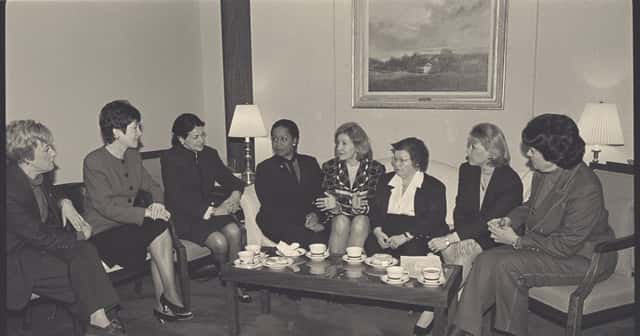
More women ran for the U.S. House this year than in any year on record, and a record 26 women are on the ballot for governor today. Those are the final pre-election counts from the Center for American Women and Politics (CAWP) at Rutgers University, which has tracked women candidates for decades.
The same data show a gap that has held for years. Women make up nearly half of Democratic House nominees but fewer than one in five Republican nominees. And despite the record number of House candidates, the number of women who survived the primaries to become nominees is still below the high set in 2020.
This story explains what the numbers show, which races could produce historic firsts, and why the two parties approach the recruitment of women so differently. It does not report or project any results. Polls are still open across most of the country.
The numbers at a glance
CAWP's post-primary analysis counts 590 women who filed and ran for the U.S. House in 2026: 402 Democrats and 188 Republicans. That beats the previous record of 583, set in both 2020 and 2022, and is well above the 467 who ran in 2024.
Fewer of them made it to November. CAWP counts 271 women House nominees (198 Democrats and 73 Republicans). That is 4.6% more than in 2024 but below the record of 298 set in 2020.
| Office | Women nominees in 2026 | Democrats | Republicans |
|---|---|---|---|
| U.S. House | 271 | 198 | 73 |
| U.S. Senate | 19 | 10 | 9 |
| Governor | 26 | 19 | 7 |
The gubernatorial figure is a record, according to CAWP. The Senate figure is not. Nineteen women are Senate nominees this year, down from 21 in 2024 and below the record of 23 set in 2018. The nine Republican women Senate nominees match the party's high from 2020, political scientist Samantha Pettey noted in an analysis for the London School of Economics' US Centre.
The growth in House candidates has not been even. Women were 27.1% of all House candidates this year, CAWP found: 33.6% of Democratic candidates and 19.1% of Republican candidates. The Democratic share fell from 37% in 2024, while the Republican share rose.
Source: Center for American Women and Politics, post-primary analysis
Show the numbers
| Year | Women candidates |
|---|---|
| 2020 | 583 |
| 2022 | 583 |
| 2024 | 467 |
| 2026 | 590 |
A wide party gap among nominees
Women are 31.8% of all major-party House nominees in 2026, according to CAWP. The share differs sharply by party. Women are 45.5% of Democratic House nominees, almost the same as the 45.8% in 2024. They are 17.6% of Republican nominees, up from 16.3% two years ago.
Source: Center for American Women and Politics, post-primary analysis
Show the numbers
| Party | 2024 | 2026 |
|---|---|---|
| Democrats | 45.8% | 45.5% |
| Republicans | 16.3% | 17.6% |
Primary results help explain the gap. In Democratic House primaries, women won 49.9% of their contests, compared with 30.4% for men, CAWP found. In Republican primaries the pattern reversed: women won 39.1% of the time and men 44.2%. The same pattern held in open-seat primaries, where no incumbent was running. There, Democratic women won at the highest rate of any group and Republican women at the lowest, CAWP found.
Where nominees are running matters too. Pettey's analysis, based on ratings as of Sept. 24, found that 40 of the 72 Republican women nominees at that time were running in districts rated "Solid Democratic." She found that 57% of Republican women nominees were in districts with a favorable Democratic environment, compared with 43% of Democratic women nominees in districts favorable to Republicans. CAWP's own count of Republican women nominees is 73; the small difference reflects different dates.
What the House picture looks like going in
There are 125 women in the House now, according to CAWP. The record is 127. Seventeen women members (12 Democrats and 5 Republicans) are leaving the House this year because they retired, lost a primary or ran for another office. That means at least 17 non-incumbent women must win just to keep the current number.
CAWP's final outlook, based on Cook Political Report ratings published before Election Day, sorts the 271 women House nominees by how competitive their races are:
| Group | Women nominees | Democrats | Republicans |
|---|---|---|---|
| Incumbents in safe or likely seats | 97 | 79 | 18 |
| Incumbents in competitive seats | 11 | 4 | 7 |
| Non-incumbents in competitive seats | 27 | 24 | 3 |
| Open-seat nominees in favorable seats | 15 | 11 | 4 |
| Running against a strongly favored opponent | 121 | 80 | 41 |
These are pre-election ratings, not results. Ratings measure how competitive analysts judged each race to be, and they can miss. In 37 House races this year, both major-party nominees are women. The record for a single cycle is 47, set in 2020.
The Senate: possible firsts in four states
Women hold 27 Senate seats now, the most ever, CAWP says. Four women senators did not run again this year. Two more who were not up for reelection, Amy Klobuchar$ in Minnesota and Marsha Blackburn$ in Tennessee, are running for governor. If both win, their Senate seats would open as well.
Several Senate races could produce firsts, according to CAWP:
- Minnesota. The open-seat race pits two women against each other: Democrat Peggy Flanagan, the lieutenant governor, and Republican Michelle Tafoya, a former sportscaster. Flanagan, a citizen of the White Earth Nation, would be the first Native American woman in the Senate. Tafoya would be the first Republican Latina senator. Our final Minnesota polling story covers the race.
- Alaska. Former Rep. Mary Peltola, a Democrat and Yup'ik, is challenging Republican Sen. Dan Sullivan$. She and Flanagan would be the first Native women senators. Background is in our Alaska Senate story.
- Illinois. If Democratic Lt. Gov. Juliana Stratton wins the open seat, three Black women would serve in the Senate at the same time for the first time, CAWP says.
- Maine. Republican Sen. Susan Collins$, one of the longest-serving women in Senate history, is in a race CAWP lists as competitive. Our Maine race page has details.
Other women Senate nominees in races CAWP rates as competitive include Democrat Annie Andrews in South Carolina and Republican Ashley Hinson$ in Iowa.
Governors: a record field and four all-woman tickets
A record 14 women serve as governor today: 10 Democrats and 4 Republicans. Five of them are term-limited and one is retiring, CAWP says. So at least six new women must win governorships this year to keep the number level.
Of the 26 women nominees for governor, six are incumbents. CAWP lists two incumbents as being in competitive races: Arizona's Katie Hobbs and Oregon's Tina Kotek, both Democrats. Kotek faces another woman, Republican state Sen. Christine Drazan, in the Oregon governor's race.
This year also has a record four tickets on which women hold both the governor and lieutenant governor slots, all Democratic:
- Massachusetts: Gov. Maura Healey and Lt. Gov. Kim Driscoll, who in 2022 became the first all-woman ticket to win.
- Michigan: Secretary of State Jocelyn Benson and state Senate Majority Leader Winnie Brinks.
- New Mexico: former Interior Secretary Deb Haaland and Secretary of State Maggie Toulouse Oliver.
- New York: Gov. Kathy Hochul and Adrienne Adams, the former New York City Council speaker.
CAWP lists several possible firsts in governor's races:
| State | Nominee | Possible first |
|---|---|---|
| Georgia | Keisha Lance Bottoms (D) | First woman governor of Georgia; first Black woman governor in the U.S. |
| New Mexico | Deb Haaland (D) | First Native American woman governor in the U.S. |
| Ohio | Amy Acton (D) | First woman elected governor of Ohio |
| Oregon | Christine Drazan (R) | First Republican woman governor of Oregon |
| Texas | Gina Hinojosa (D) | First Latina governor of Texas |
| Minnesota, Tennessee | Amy Klobuchar (D), Marsha Blackburn (R) | First woman governor of each state |
Ohio has had one woman governor, Republican Nancy Hollister, who served for 12 days after succeeding to the office rather than winning an election, CAWP notes. Our stories on the Ohio governor's race, the Georgia races and the Texas governor's race cover the contests in detail.
Why the parties differ on recruiting women
The two parties have long taken different approaches to the gender of their candidates, and those approaches help explain the gap in the numbers.
On the Democratic side, EMILYs List has recruited, trained and funded women candidates for four decades. The group says it works "to elect Democratic pro-choice women up and down the ballot and across the country." It endorses only candidates who support abortion rights, so its help goes to one slice of women candidates.
Republican groups that back women candidates describe themselves as catching up. Rep. Elise Stefanik of New York started Elevate PAC, or E-PAC, after the 2018 midterms. That year she had recruited more than 100 women to run as the National Republican Congressional Committee's recruitment chair, but only one new Republican woman won a House seat. E-PAC says it was launched "to increase that number by supporting top Republican female candidates in primaries across the country." It says it seeks to "recruit, develop, support, and mentor" women candidates "who have demonstrated electability."$
Danielle Barrow, president of the Winning for Women Action Fund, told Roll Call in February that EMILYs List has "a big jump-start" and that her side's effort "only started … seven or eight years ago." She added: "So we are still playing catch-up." Barrow also said Republican women need to win "safer seats," not only swing seats, to build long-term gains.
Tina Ramirez, a spokeswoman for Maggie's List, another PAC that backs conservative women, told Roll Call that Republican women "are really strong candidates" and that the party should invest in them. She also said there is "usually a 3-point advantage when Republican women are running on a ticket." Roll Call did not cite a study for that figure, and 567politics could not verify it.
Many Republicans reject the idea that a candidate's gender should matter at all. In 2018, Rep. Tom Emmer of Minnesota, then the incoming NRCC chairman, said Stefanik's plan to take sides in primaries was "a mistake." He told Roll Call: "It shouldn't be just based on looking for a specific set of ingredients — gender, race, religion — and then we're going to play in the primary."$
Some Republican women running this year make a similar case. "You have to have merit," Jessica Hart Steinmann, a Texas House candidate, told Roll Call. "It's not about identity politics." Alex Mealer, another Texas candidate, said, "I'm not trying to fight for some special demographic."
Kelly Dittmar, CAWP's director of research, described the broader pattern to Roll Call this way: "The Republican Party broadly speaking has really engaged in anti-identity politics." That framing helps explain why Republican groups that focus on women often stress electability and merit rather than representation as such.
What the data do not show
The CAWP counts measure who ran and who was nominated. They do not show why fewer Republican women run, and researchers disagree about the main causes. Possible explanations include the party's resistance to identity-based recruiting, a smaller network of donors focused on women candidates, and the number of Republican women nominees in districts that lean toward the other party.
The data also do not show how voters treat women candidates. Ramirez's claim of a built-in advantage for Republican women is not supported by a published study that 567politics could find.
Finally, the pre-election ratings that CAWP uses are forecasts by analysts, not results. Our methodology page explains how 567politics treats polls and ratings. Results will come after polls close tonight, and some races may take days to count.
Differing perspectives
Should parties and outside groups work to elect more women, or leave a candidate's gender out of the decision?
Each position is summarized as its supporters make it, with equal weight and in alphabetical order. A summary is not an endorsement; the evidence for each is weighed in the story above.
Back Republican women in primaries to close the gap
Who holds it: Elevate PAC (E-PAC), founded by Rep. Elise Stefanik; Winning for Women
E-PAC says the Republican House conference does not reflect the American public, and that many women recruited in 2018 lost their primaries. It says it was created to support top Republican women in primaries, so stronger candidates reach the general election. It aims to recruit, develop, support and mentor women who have shown they can win, with campaign strategy and money. Allied groups say Republicans are still catching up to Democratic efforts.
In their words: Elevate PAC ↗
Pick nominees on merit and leave gender out of it
Who holds it: Rep. Tom Emmer and other Republicans who oppose identity-based recruiting; some Republican women candidates
Rep. Tom Emmer said in 2018 that party committees should not take sides in primaries based on a specific set of ingredients such as gender, race or religion. He said candidates succeed by working their districts and that Washington-driven primary choices can backfire. Some Republican women candidates make a similar case: they say voters should judge them on merit and results, not as representatives of a demographic group.
In their words: Roll Call (interview with Rep. Tom Emmer) ↗
Recruit and fund women who share the group's policy views
Who holds it: EMILYs List and other Democratic-aligned groups
EMILYs List says it works to elect Democratic pro-choice women up and down the ballot and across the country, with a goal of fighting for "our rights and our communities." It says leaders who reflect all Americans are better placed to change policy for the better, and it treats diversity as a driver of progressive change. Its model is to recruit, train and fund women early, before primaries are settled.
In their words: EMILYs List ↗
READ BEYOND 567POLITICS
Alternate sources & perspectives
Independent coverage and primary evidence to help you compare arguments. A link is not an endorsement; perspective labels describe the linked material.
- primary evidence
Final Outlooks: Women in 2026 Congressional and Gubernatorial Elections ↗
Center for American Women and Politics, Rutgers University
Final pre-election counts of women nominees for House, Senate and governor, with possible firsts and all-woman tickets.
- primary evidence
Post-Primary Analysis: Women in 2026 Congressional Elections ↗
Center for American Women and Politics, Rutgers University
Record 590 women House candidates, nominee shares by party and primary win rates by gender and party.
- primary evidence
New Records for Women Candidates but Partisan Disparities Persist ↗
Center for American Women and Politics, Rutgers University
Mid-cycle release on record numbers of women candidates and the continuing gap between the parties.
- independent analysis
The 2026 Midterms: Why it won't be a record-breaking midterm year for Republican women in Congress ↗
LSE US Centre (USAPP blog)
Samantha Pettey finds most Republican women nominees are running in Democratic-leaning districts.
- independent analysis
Texas leads push to add more Republican women to the House ↗
Roll Call
Interviews with Winning for Women, Maggie's List, CAWP's Kelly Dittmar and Republican candidates who reject identity politics.
- right argument
Elise Stefanik Wants to Play in Primaries to Help Republican Women ↗
Roll Call
Rep. Tom Emmer explains why he opposed party involvement in primaries based on gender, race or religion.
- right argument
About E-PAC ↗
Elevate PAC
Stefanik's PAC sets out its case for backing Republican women in primaries.
- left argument
About EMILYs List ↗
EMILYs List
The group's mission to elect Democratic pro-choice women up and down the ballot.
Reviewed 2026-11-03. Sources picked by hand because discover_politics_sources returned only dictionary and stock-photo pages about women in general. Every listed page was opened before publication. CAWP's final outlook contains some name typos (for example 'Katie Hobb' and Michelle Tafoya listed as D-MN); the story uses the correct names and parties. Maggie's List's claim of a 3-point advantage for Republican women could not be traced to a published study. No Winning for Women statement on its own site was reviewed; its president is quoted through Roll Call. The story reports no results; CAWP's competitiveness groupings rest on Cook Political Report ratings, which are forecasts.